Why Dogs Lick Their Paws
A little paw licking can be normal grooming. But if your dog keeps licking one paw, chews several paws, or seems unable to settle, it is worth taking a closer look.
Paw licking can happen because the skin is itchy, the paw hurts, something is stuck, or the behavior has become comforting or habitual. The goal is not to guess the cause too quickly, but to notice the pattern and check for signs that your dog needs veterinary care.
Common Reasons Dogs Lick Their Paws
Allergies or itchy skin
Allergies are a common reason dogs lick or chew their paws. Environmental allergens, contact irritation, and possible food sensitivities can all make the paws feel itchy or inflamed.
Dogs with allergies may also show signs such as:
- Scratching or chewing other areas
- Redness between the toes
- Face rubbing
- Recurring ear irritation
- Hair loss or irritated skin
Irritation from the environment
Sometimes the paws are reacting to something your dog walked through or stood on.
Possible irritants include:
- Grass, pollen, or weeds
- Lawn products
- Sidewalk salt or ice melt
- Hot pavement
- Cleaning products
- Rough trails, gravel, or abrasive surfaces
If licking happens after walks or outdoor play, rinse your dog’s paws with lukewarm water and dry them well.
Injury or something stuck in the paw
Sudden licking, especially when it is focused on one paw, may mean something hurts.
Check gently for:
- Small cuts or scrapes
- A torn or cracked nail
- A thorn, burr, foxtail, or splinter
- A tick between the toes
- A sore, cracked, or torn paw pad
- Swelling or tenderness
Do not dig deeply into the paw or force your dog to let you examine a painful area. A veterinarian can safely remove embedded material and treat injuries.
Parasites or infection
Fleas, mites, ticks, yeast, and bacteria can all contribute to itching or discomfort. Licking can also keep the skin damp, which may make irritation worse and create the right conditions for infection.
Call your veterinarian if you notice:
- Bad odor
- Discharge
- Crusts or scabs
- Oozing skin
- Redness that is spreading
- Thickened or darkened skin
- Repeated licking that does not improve
Pain in the paw, leg, or joint
Not all paw licking starts with the skin. Some dogs lick because a paw, nail, toe, leg, or joint is painful.
Pain-related signs may include:
- Limping
- Holding up one paw
- Reluctance to walk, run, or climb stairs
- Sensitivity when the paw is touched
- Swelling around a toe, nail, or joint
- Licking the same spot repeatedly
Older dogs, athletic dogs, and dogs who recently slipped, jumped, or played hard may need a veterinary exam to rule out pain or injury.
Stress, anxiety, boredom, or habit
Some dogs lick when they are stressed, bored, tired, or trying to soothe themselves. Over time, licking can become a habit even after the original trigger is gone.
Still, it is best to rule out medical causes first. Allergies, infections, parasites, and pain can all look like “just a habit” at first.
What to Check at Home
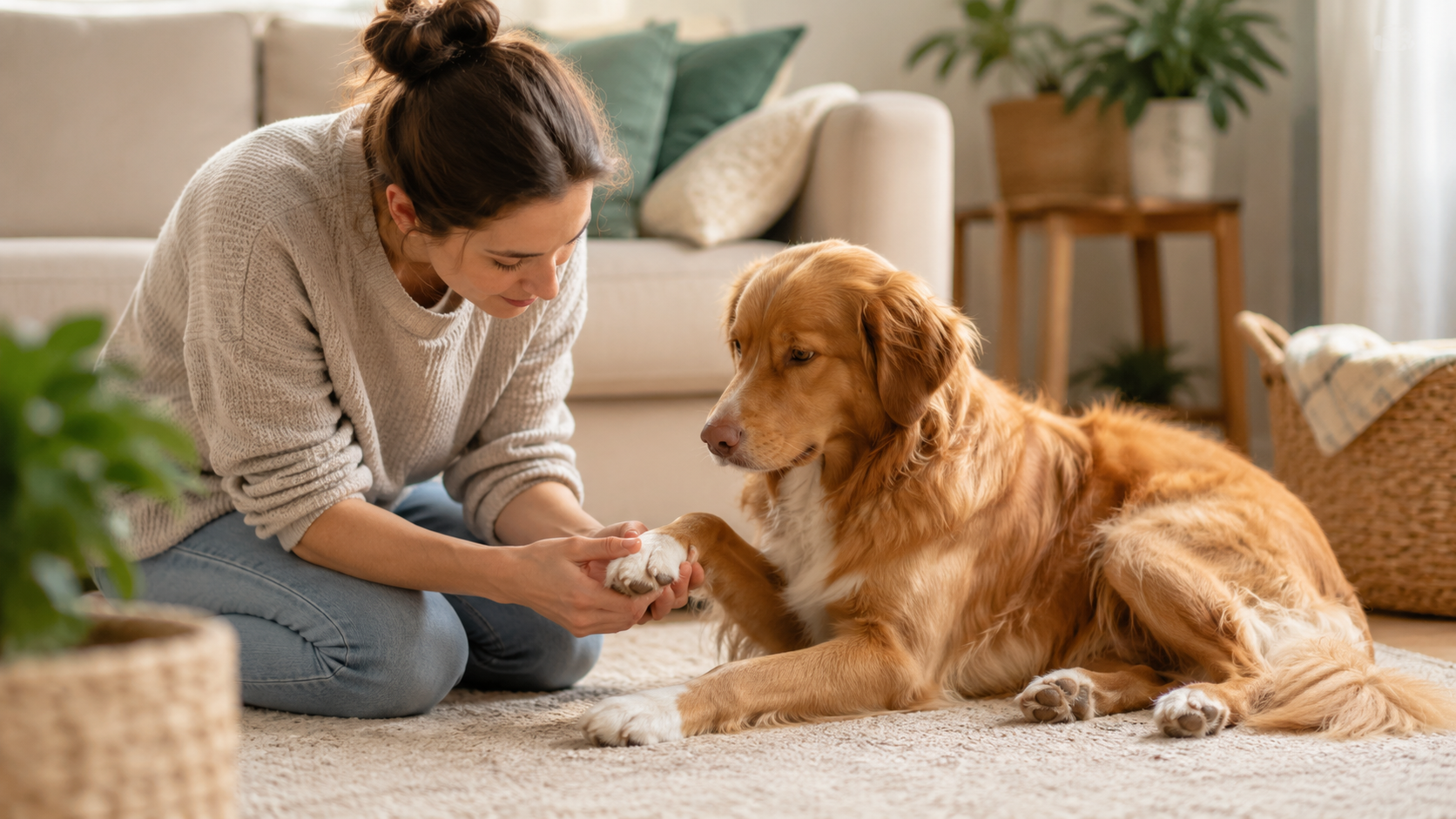
Choose a calm moment and look gently at your dog’s paws. Check the top and bottom of each paw, the nails, the pads, and the skin between the toes.
Look for:
- Redness
- Swelling
- Cuts or cracks
- Broken nails
- Odor
- Discharge
- Ticks or debris
- Hair loss
- Tenderness
- A difference between one paw and the others
Also notice the pattern. Is your dog licking one paw or all four? Did it start suddenly? Does it happen after walks, during allergy season, at bedtime, or when your dog is alone?
These details can help your veterinarian narrow down the cause.
What You Can Do Safely
For mild licking with no obvious wound, swelling, bleeding, limping, or severe discomfort, you can start with simple paw care.
Try:
- Rinsing paws with lukewarm water after walks
- Drying between the toes well
- Checking paws after hikes or time in tall grass
- Using pet-safe paw protection when surfaces are hot, icy, salty, or rough
- Keeping nails trimmed to a comfortable length
- Preventing excessive licking while you arrange veterinary guidance
Avoid applying human creams, essential oils, alcohol, hydrogen peroxide, or leftover medications unless your veterinarian specifically recommends them. Some products can irritate skin further or be unsafe if licked.
When to Call Your Veterinarian
Contact your veterinarian if the licking is persistent, worsening, focused on one painful-looking paw, or keeps coming back.
You should also call if you see:
- Limping
- Swelling
- Bleeding
- Open sores
- Discharge
- Bad odor
- Hair loss
- A broken nail
- A suspected foreign object
- Ear irritation or other allergy signs
- Changes in appetite, energy, or behavior
Seek prompt veterinary help for severe pain, deep cuts, heavy bleeding, rapidly spreading redness, significant swelling, or any symptom that feels urgent or concerning.
How Vets May Help
Your veterinarian may examine the paw, look for foreign material or injury, check for parasites, assess for infection, and ask about allergy patterns or pain signs.
Depending on what they find, treatment may involve wound care, parasite control, infection treatment, allergy management, pain relief, behavior support, or changes to your dog’s routine.
The most helpful next step is to identify why your dog is licking instead of only trying to stop the licking itself.
The Bottom Line
Occasional paw licking is not always a problem. Persistent, intense, sudden, or one-sided licking deserves attention.
Check the paw gently, keep notes on the pattern, avoid home treatments that could irritate the skin, and contact your veterinarian if the licking continues or comes with signs of pain, infection, injury, or illness.