
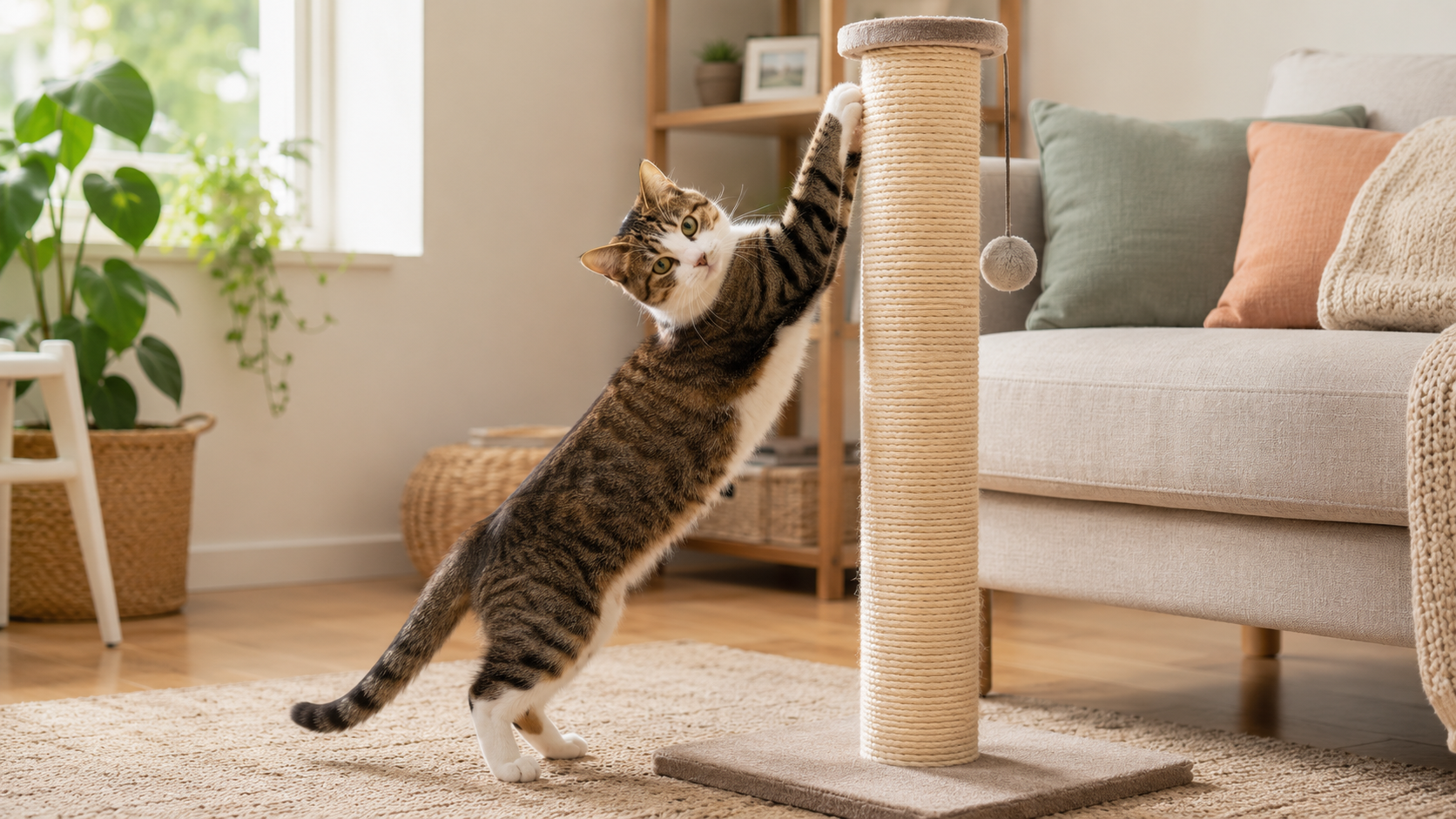
Why Cats Scratch Furniture and How to Redirect It
Cats do not scratch furniture to be spiteful. Scratching is a normal behavior that helps cats stretch, maintain their claws, mark familiar areas, and communicate through scent and visible scratch marks.
That does not mean your couch has to become the scratching post. With the right setup, you can protect furniture while giving your cat better places to scratch.
Why Cats Scratch Furniture
Cats scratch because the behavior meets several natural needs. Furniture often becomes the target because it is sturdy, textured, tall, and located where people and pets spend time.
Common reasons cats scratch include:
- Stretching and exercise
- Claw maintenance
- Scent and visual marking
- Stress relief or excitement
- Preference for a certain texture
- Convenience and location
Scratching Helps Cats Stretch
Scratching lets cats stretch their shoulders, legs, back, and paws. Many cats especially enjoy a big stretch after waking up.
This is why tall, sturdy vertical scratchers can be so appealing. A post that lets your cat reach up and stretch fully is often more useful than a short or wobbly one.
Scratching Supports Claw Maintenance
Scratching can help remove the outer sheath of the claw as new growth comes in. You may notice small, crescent-shaped claw sheaths near favorite scratching spots.
This is normal. The goal is not to stop claw use entirely, but to give your cat an appropriate place to do it.
Scratching Marks Territory
Cats have scent glands in their paws. When they scratch, they leave both scent and visible marks.
This can make a spot feel familiar and secure. It is one reason cats often scratch in socially important areas, such as living rooms, doorways, and places where family members gather.
Why the Sofa Is So Appealing
Furniture often checks all the boxes from a cat’s point of view.
A sofa or chair may be:
- Stable
- Tall enough for stretching
- Covered in a satisfying texture
- Easy to access
- Located in a busy, meaningful room
- Already marked with your cat’s scent
If a scratching post is hidden in a corner, too short, or unstable, your cat may choose the furniture instead.
Choose Scratchers Your Cat Actually Likes
Offer a few options and watch what your cat uses. Different cats prefer different shapes and textures.
Good options include:
- Tall vertical posts
- Horizontal cardboard scratchers
- Angled scratchers
- Sisal fabric scratchers
- Sisal rope posts
- Scratch pads near favorite resting spots
A good vertical post should be stable and tall enough for a full-body stretch. If it wobbles, your cat may avoid it.
Match the Texture Your Cat Prefers
Look at what your cat already scratches. Their current target can give you clues.
Try:
- Sisal fabric or sisal rope if your cat scratches upholstered furniture
- Cardboard if your cat likes shredding textures
- Horizontal scratchers if your cat scratches rugs or carpets
- Angled scratchers if your cat likes a slanted surface
You may need to test more than one option before finding your cat’s favorite.
Put Scratchers in the Right Places
Placement is one of the biggest keys to success. A scratcher tucked away in a spare room is usually less helpful than one placed where your cat already wants to scratch.
Place scratchers:
- Beside targeted furniture
- Near favorite sleeping spots
- In social rooms where your cat spends time
- Near doorways or transition areas
- In locations where your cat already stretches or scratches
Once your cat is using the new scratcher reliably, you may be able to move it gradually. Move it slowly, a little at a time, rather than relocating it suddenly.
Encourage the Scratcher
Make the scratcher rewarding and interesting.
You can try:
- Sprinkling catnip or silvervine nearby
- Using treats around the scratcher
- Dragging a wand toy near or up the scratcher
- Praising your cat when they use it
- Placing the scratcher near a favorite nap spot
Reward your cat when they choose the scratcher on their own. Quiet reinforcement can help the new habit stick.
Make Furniture Less Appealing Temporarily
While your cat learns the new routine, make the targeted furniture less rewarding to scratch.
Temporary options may include:
- A washable throw
- A furniture protector
- Double-sided pet-safe tape
- A smooth plastic barrier
- Rearranging access to a favorite scratching corner
The goal is to make the furniture boring while making the scratcher easy, satisfying, and rewarding.
What Not to Do
Avoid punishment. Yelling, spraying with water, or physically forcing your cat’s paws onto the post can create fear and confusion.
Punishment also may not teach your cat what to do instead. Your cat may simply learn to scratch when you are not watching.
Do not:
- Yell at your cat for scratching
- Spray your cat with water
- Hit, chase, or scare your cat
- Force your cat’s paws onto a scratching post
- Remove all scratching options
Redirecting works best when the appropriate option is more appealing than the furniture.
Nail Care Can Help
Regular nail trims may reduce damage from scratching. Use cat-safe nail clippers and go slowly.
Tips for easier nail trims:
- Choose a calm time
- Handle paws gently
- Trim only the sharp tip
- Avoid the pink quick inside the nail
- Reward your cat after each step
- Stop before your cat becomes overwhelmed
If you are unsure how to trim your cat’s nails, ask your veterinarian, groomer, or veterinary team for a demonstration.
What About Nail Caps?
Nail caps may be an option for some cats, but they must be applied correctly and replaced as the nails grow.
Ask your veterinarian whether nail caps are appropriate for your cat, especially if your cat is stressed by paw handling or has nail, skin, or mobility concerns.
When Scratching May Need Extra Help
Most furniture scratching can be improved with better outlets, better placement, and consistent redirection.
Contact your veterinarian if scratching suddenly increases or appears with other changes, such as:
- Hiding
- Aggression
- Litter box changes
- Overgrooming
- Appetite changes
- Low energy
- Signs of pain or stress
Behavior changes can sometimes have medical or stress-related contributors.
The Bottom Line
Scratching is normal cat behavior. Your cat needs to scratch, but your furniture does not have to be the target.
Choose scratchers your cat actually likes, place them where your cat already wants to scratch, reward the behavior you want, and use gentle furniture barriers while the new habit develops. Scratching is normal; the target can change.