How to Stop Puppy Biting Without Making It Worse
Puppy biting can be frustrating, especially when tiny teeth catch your hands, sleeves, ankles, or children’s clothing.
The good news is that mouthing is a normal part of puppy development. Puppies explore with their mouths, practice play, and learn how much pressure is too much.
The goal is not to scare your puppy into stopping. It is to teach them what to bite, how gently to use their mouth, and how to calm down before play gets too wild.
Why Puppies Bite
Puppies may bite for several normal reasons. They may be excited, teething, seeking attention, practicing play, or trying to interact with the people around them.
Biting often increases when a puppy is:
- Overtired
- Overexcited
- Teething
- Under-stimulated
- Playing too roughly
- Chasing moving hands, sleeves, or ankles
- Past due for a nap or quiet break
Biting that looks “naughty” is often a puppy who needs guidance, rest, a better outlet, or a calmer routine.
Teach Bite Inhibition Gently
Bite inhibition means a puppy learns to control the pressure of their mouth. This is an important skill, and it is best taught calmly.
If your puppy bites too hard during play:
- Pause the interaction.
- Stay calm and boring.
- Briefly remove your attention.
- Stand still or step behind a gate for a few seconds.
- Return and offer a toy or calmer activity.
The message is simple: gentle play continues, but hard biting makes the fun pause.
Avoid big reactions. Squealing, yelling, pushing, or grabbing can make some puppies more excited and may turn the moment into a rougher game.
Redirect to the Right Thing
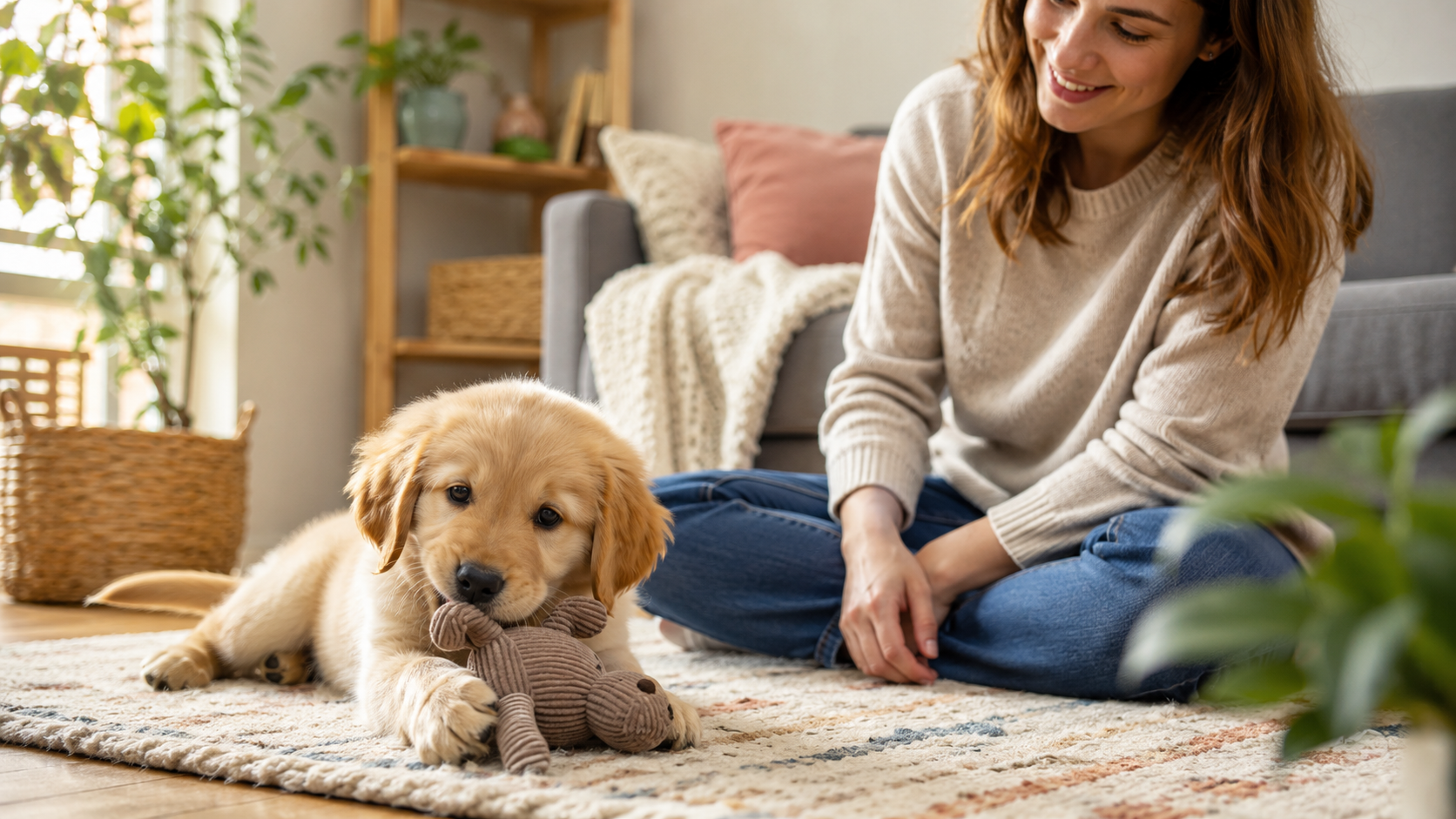
Keep toys nearby in the places where biting usually happens. When your puppy goes for hands, sleeves, or ankles, offer something appropriate to bite instead.
Good options include:
- A tug toy
- A soft puppy-safe chew
- A stuffed toy
- A food puzzle
- A frozen puppy-safe chew recommended by your veterinarian
Praise and engage when your puppy bites the toy instead of you. The more often your puppy practices the right choice, the easier it becomes.
What to Do About Ankle Biting
Ankle biting is common because moving feet and pant legs can feel exciting to a puppy.
Try carrying a toy before your puppy starts. Move the toy low and away from your body so your puppy has something appropriate to chase.
You can also:
- Slow your movement
- Stop briefly if your puppy grabs clothing
- Redirect to a toy
- Reward walking beside you calmly
- Use a gate or pen when your puppy is too worked up to make good choices
Use Naps and Calm Breaks
Many puppies bite more when they are overtired. If your puppy becomes frantic, jumpy, growly, or unable to respond to redirection, they may need a nap rather than more play.
A quiet crate, pen, or puppy-safe room can help your puppy settle.
Build a daily rhythm that includes:
- Potty breaks
- Short play sessions
- Short training sessions
- Chewing time
- Meals or food puzzles
- Plenty of rest
Puppies often do better when calm breaks are part of the routine instead of only happening after things get wild.
Be Consistent With Everyone
Puppy biting improves faster when the whole household responds the same way.
Decide together:
- Which toys are allowed for tug
- What phrase means play is pausing
- Where your puppy can calm down
- How everyone will respond to hard biting
- Which games are too rough for now
Consistency helps your puppy understand the rules.
Help Children Interact Safely
Children and puppies can both get excited quickly. Close supervision is important.
Coach children not to:
- Squeal and run from the puppy
- Wave hands near the puppy’s face
- Roughhouse with hands
- Pull toys away in a teasing way
- Grab the puppy when the puppy is overstimulated
If either the child or puppy gets overwhelmed, separate them calmly and give everyone a break.
Reward Calm Behavior Before Biting Starts
Do not wait until your puppy is already biting to give attention. Catch calm behavior early.
Reward your puppy for:
- Lying down quietly
- Chewing an approved toy
- Following you without grabbing ankles
- Responding to their name
- Sitting before play starts
- Settling in a crate, pen, or bed
This teaches your puppy that calm choices also get attention, play, and rewards.
What to Avoid
Avoid harsh or scary corrections. They can frighten puppies, increase excitement, or teach your puppy that hands are unsafe.
Do not use:
- Yelling
- Hitting
- Alpha rolls
- Muzzle grabbing
- Holding the mouth shut
- Scruffing
- Physical punishment
- Intentionally rough hand play
Also avoid encouraging your puppy to bite hands during play if you do not want hand biting later. Use toys as the main play target from the start.
When to Ask for Help
Contact your veterinarian if biting is sudden, severe, paired with signs of pain, or seems unusual for your puppy’s age and situation.
Consider working with a qualified positive-reinforcement trainer or veterinary behavior professional if biting is:
- Intense
- Escalating
- Difficult to interrupt
- Directed aggressively
- Breaking skin often
- Paired with guarding, freezing, or stiff body language
- Creating safety concerns at home
Early support can prevent patterns from becoming harder to manage.
The Bottom Line
Puppy biting is common, but your response matters. Calm redirection, gentle bite-inhibition practice, naps, consistency, and appropriate toys can help your puppy learn better ways to play.
With patience and kind structure, most puppies can learn to use their mouths more gently and settle before play gets out of control.